Last updated November 17, 2026
Prefab or Site-Built ADU in North Las Vegas: How to Choose
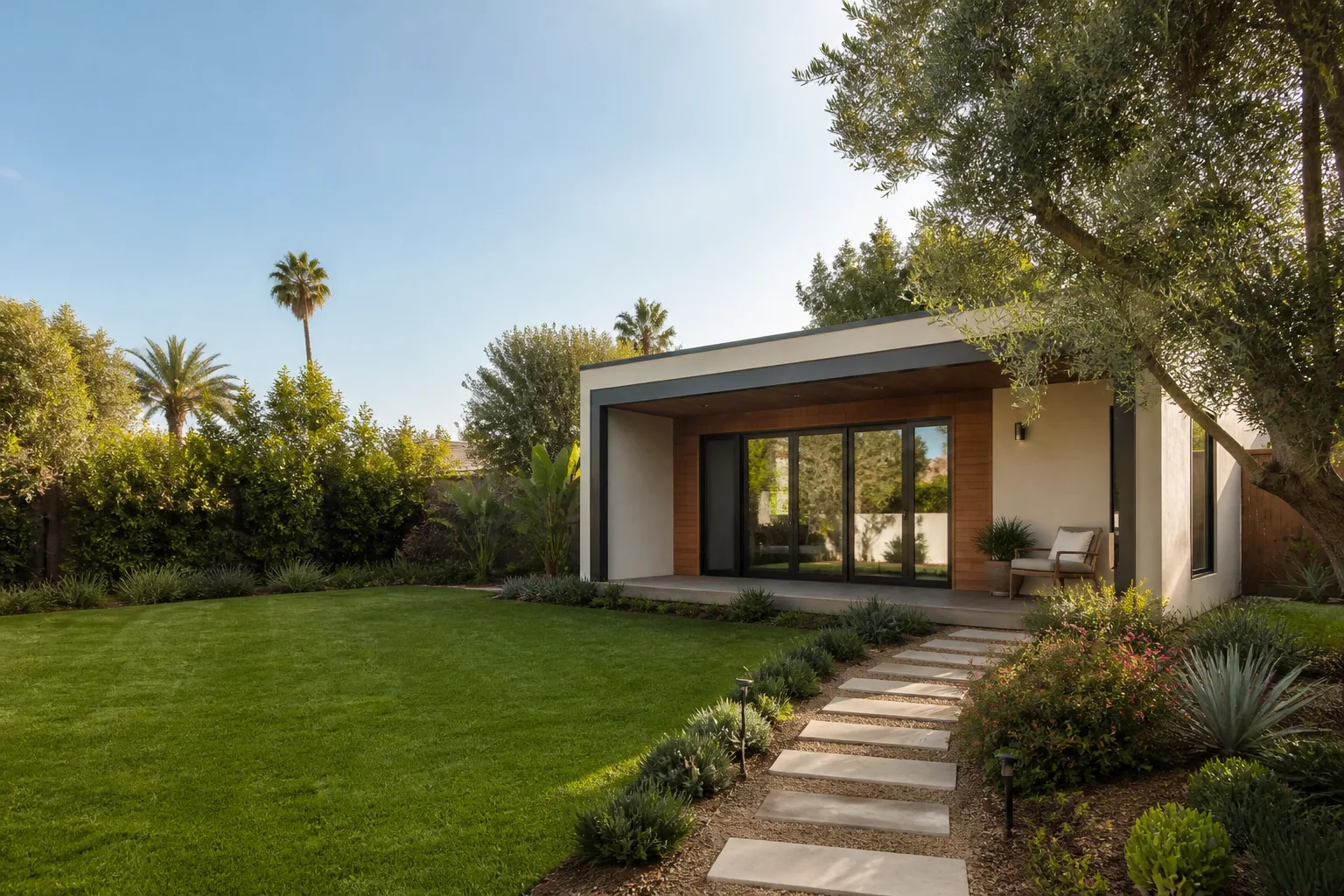
Premium prefab ADU systems from companies like Abodu, Cover, and Dvele are engineered to arrive roughly 80% complete and install in days. That number is real. What the brochure leaves out is that the timeline assumes your North Las Vegas lot already has crane access, a level pad, and utility stubs in place. The site-work phase is nearly identical whether your unit was framed in a factory or on your driveway, which means prefab’s speed advantage is genuine but narrower than the marketing implies. This guide walks through the decision the way we actually work through it with homeowners: lot first, permit path second, budget third, and structure type last. By the end you’ll know which questions to ask, in what order, and where each option tends to win.
Quick Answer
For most North Las Vegas lots, the right ADU delivery method comes down to lot access and site conditions, not speed or sticker price. Prefab wins when your property has clean crane or truck access, a fairly level build area, and you want a proven floor plan with a manufacturer warranty. Site-built wins when your lot is tight or irregular, your design needs to fit a specific shape or match an existing house, or you’re converting an existing garage. A specialist who builds both will tell you which path your lot supports before you fall in love with a floor plan.
Table of Contents
- What “Prefab” Actually Means for an ADU
- Why We Look at Your Lot Before Anything Else
- Site Requirements That Decide Whether Prefab Is Feasible
- The Honest Timeline Comparison: Prefab vs. Site-Built
- Quality and Customization: Where Each Path Wins
- The Third Path: Garage Conversions
- How to Evaluate a Contractor Who Offers Both
- Questions to Ask Before You Sign
- Common Mistakes to Avoid
- When to Call a Professional
- Frequently Asked Questions
- The Bottom Line
What “Prefab” Actually Means for an ADU
Homeowners use the word “prefab” to describe three very different types of construction, and the differences matter enormously when you’re dealing with a building department. Getting clear on which kind you’re buying is the first real decision point.
- Modular: The unit is built in factory sections, typically wall panels and floor/ceiling boxes, then assembled on site. You’ll see more assembly labor than a volumetric unit.
- Panelized: Walls, floors, and roof components arrive flat and are framed together on your foundation. This is closest to site-built in terms of labor sequence, but with factory-controlled dimensions and tolerances.
- Volumetric (fully finished): The whole room or unit is finished in the factory and craned onto your prepared foundation. This is what most people picture when they hear “prefab ADU.” It has the highest site access requirements and the fewest on-site construction hours.
Each type interacts with permits differently. A volumetric unit arrives with factory inspections and manufacturer documentation that a local inspector needs to review alongside your site permits. A panelized unit behaves more like traditional construction from the inspector’s perspective, because the framing, sheathing, and utility rough-in happen on site. Panelized and modular systems from Abodu, Cover, and Dvele each carry their own documentation packages and approval pathways. A builder who has navigated that paperwork repeatedly knows which questions to expect, and that pattern-matched experience saves weeks of back-and-forth. This is one reason we work almost exclusively in the ADU space: our ADU builders have handled these exact permit sequences many times over.
Why “80% Complete” Is Really “20% Remaining”
When a premium prefab manufacturer advertises an 80% complete unit, the remaining 20% is the part that happens on your property. Foundation, utility trenching, connection to the main panel, final inspections. If your site requires engineering to correct slope or upgrades to allow a crane truck to reach the pad, that 20% can take as long or longer than the factory build did. Neither path is faster. They’re faster in different phases.
Why We Look at Your Lot Before Anything Else
In most cities the prefab-versus-site-built conversation starts with budget. In North Las Vegas, it usually needs to start with your dirt. North Las Vegas spans a wide range of lot conditions – older, tighter parcels in the central neighborhoods, larger lots on the edges of the valley, and everything between. The lot determines which paths are even available to you, which makes every other comparison premature until it’s settled.
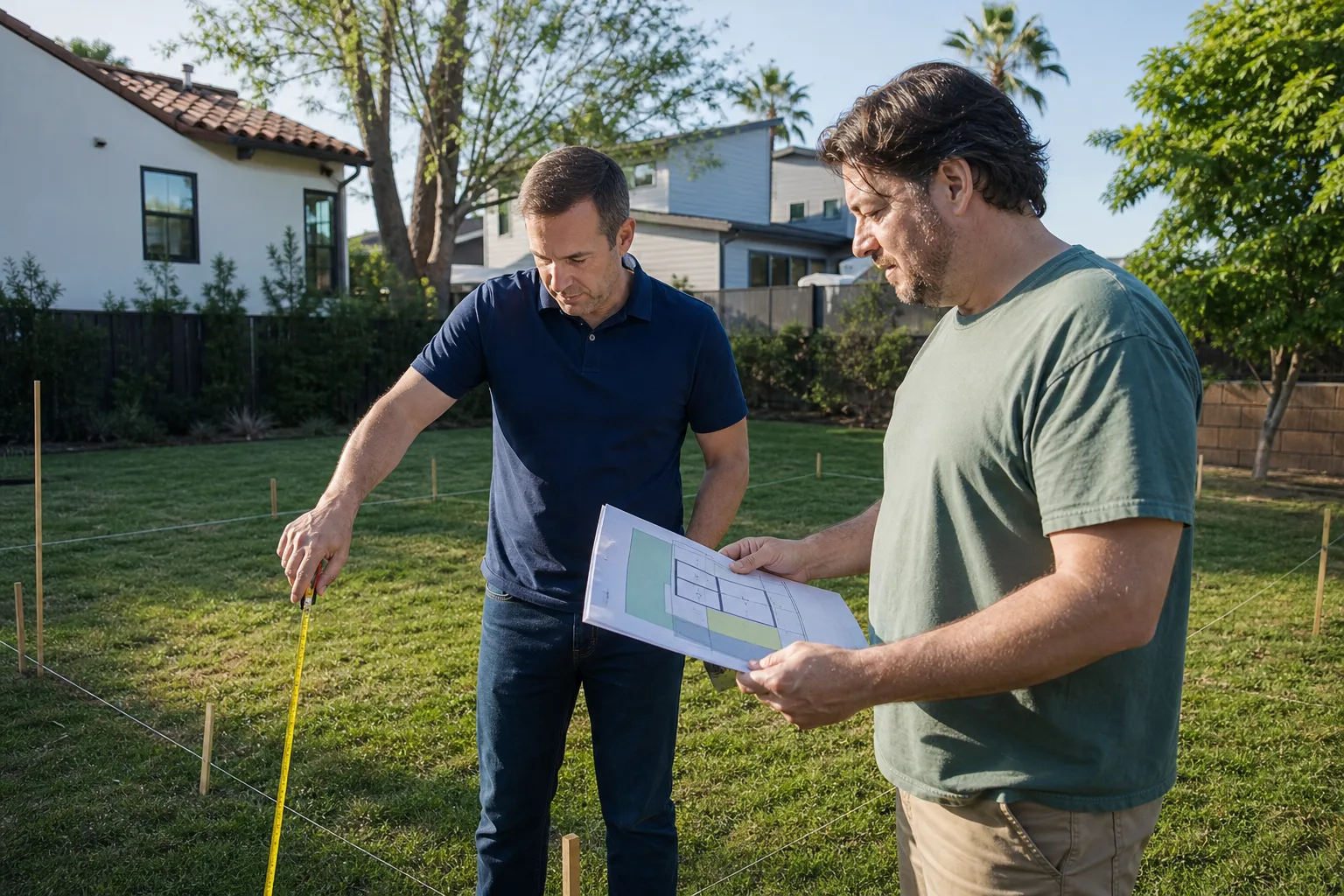
Here’s what we look at on a first site walk:
- Access width and approach: Can a truck of the size needed to deliver a prefab unit reach the build area without clipping a wall, fence, or neighbor’s landscaping?
- Crane pad feasibility: Volumetric prefab units are set with a crane. The rig needs a stable, level surface to stand on, and the boom radius has to reach the pad from that position. Narrow side yards often rule out volumetric delivery entirely.
- Slope and grade: Our desert lots are often graded toward drainage swales. A level pad is easy to build, but if the natural grade falls hard away from where a prefab needs to sit, the foundation work to correct that can offset a meaningful part of the prefab speed advantage.
- Utility locations: Where the main panel sits, where the sewer lateral runs, and how far the ADU will sit from those points drives a lot of the site-work cost on either path.
- Overhead obstructions: Trees aren’t common in most of North Las Vegas, but power lines and neighboring structures can still limit where a crane can swing.
A knowledgeable builder walks a lot with these questions in mind, then tells you which paths are realistic. If a prefab unit can’t be delivered, we don’t try to make it work. And if North Las Vegas city code makes one path dramatically easier for your specific lot, that’s information you deserve before you commit to a floor plan.
Site Requirements That Decide Whether Prefab Is Feasible
The most useful thing you can do early is understand the site requirements prefab units impose. These aren’t generically strict, but they’re non-negotiable. A factory engineer will review your site plan before a single unit is scheduled, and if the site doesn’t clear their checklist, the schedule stops. Here is what’s typically evaluated:
Access
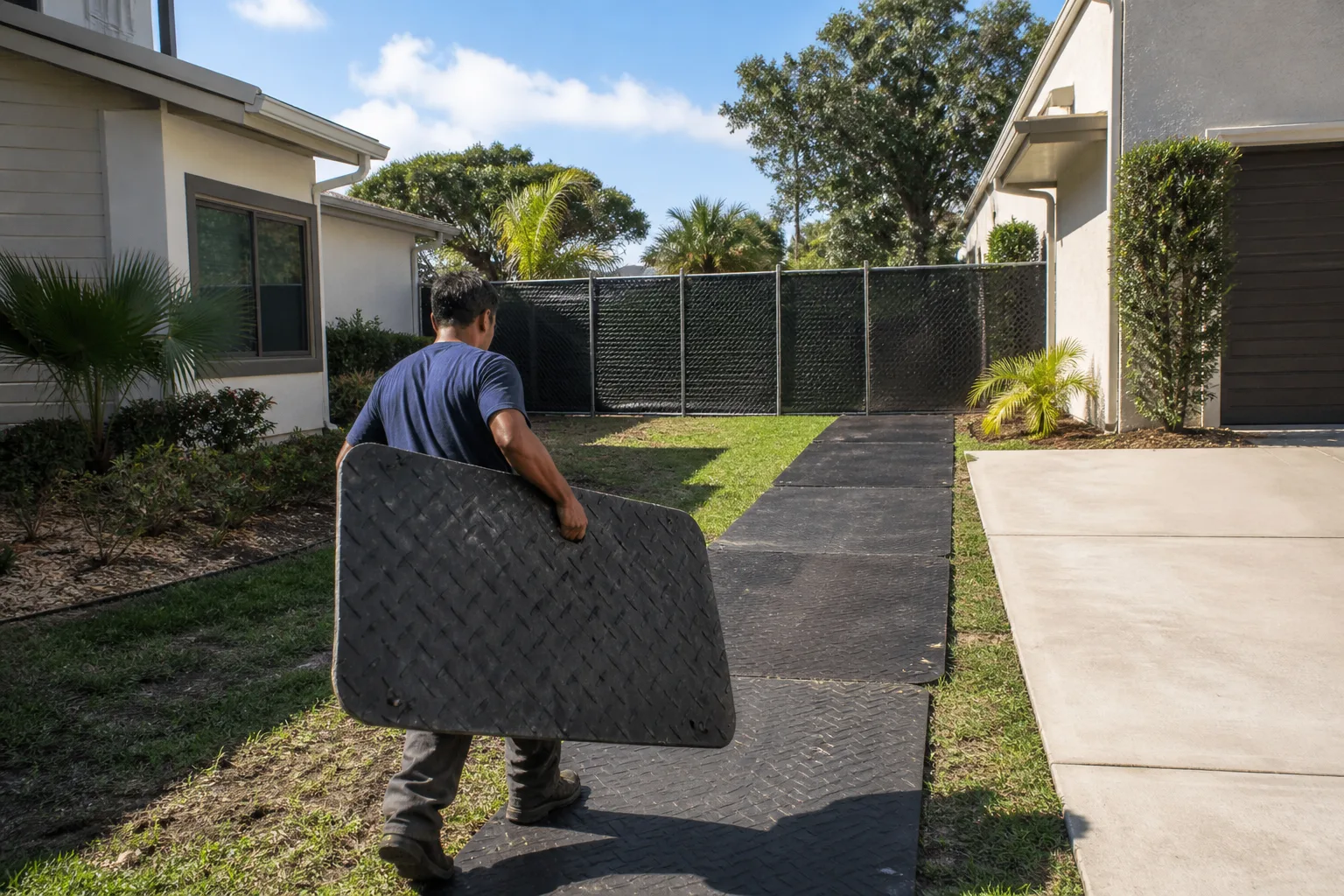
A delivery truck needs a route from the street to the build area that’s wide enough for the vehicle itself plus safe clearance. On some residential streets in North Las Vegas, the last fifty feet are the hardest part. Corner lots, alleys, and wide driveway approaches make volumetric delivery easier; shared narrow driveways or fenced side yards make it harder or impossible.
Crane Pad
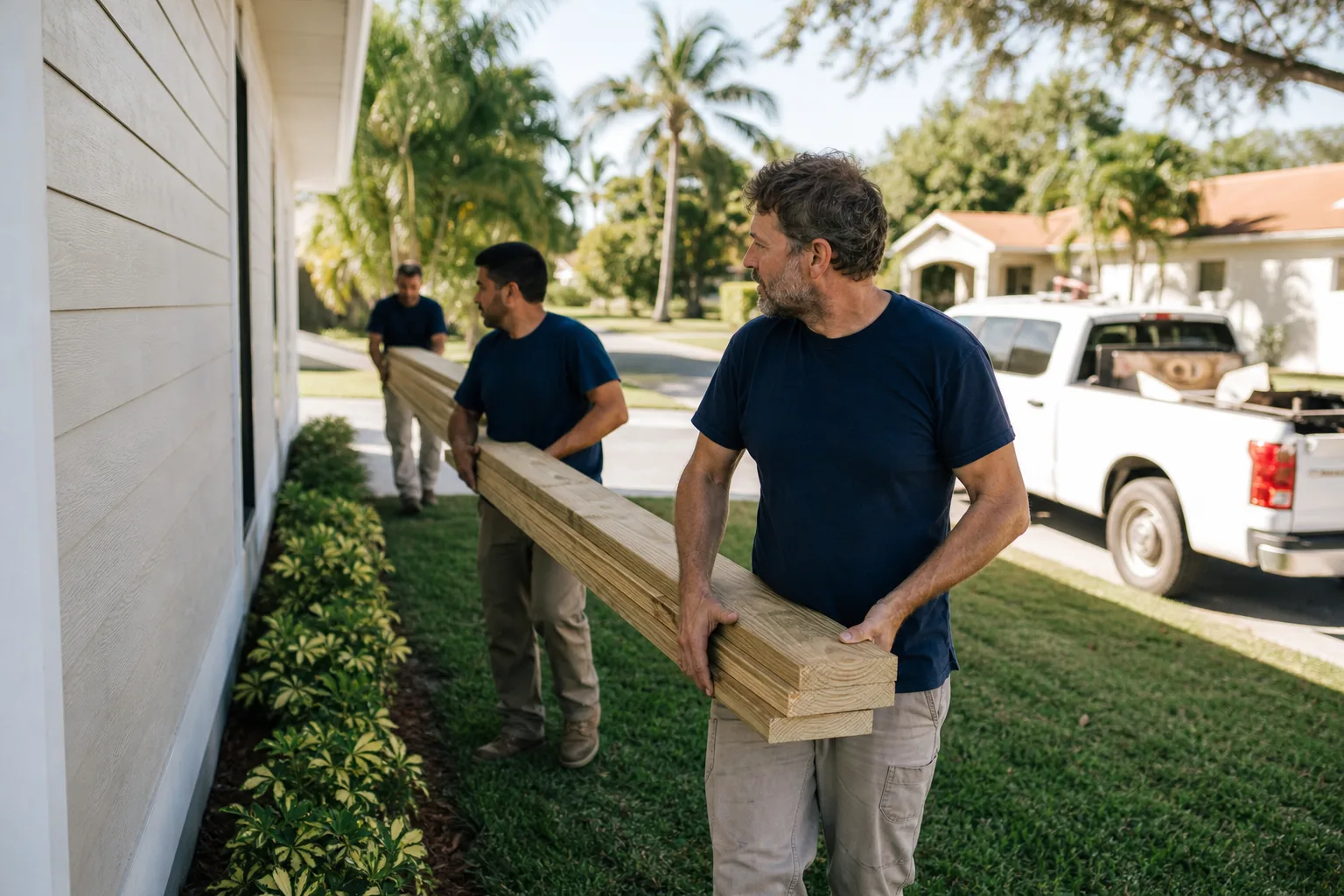
The crane that sets a volumetric unit needs a stable footprint. That means level, compacted ground with room to stand and swing. If your property doesn’t offer that, a crane can sometimes set up on the street – but that requires street closure permits and additional coordination. Panelized systems sidestep this entirely; they’re delivered by truck and assembled by hand afterward.
Foundation Readiness
Every ADU sits on a foundation, and that foundation is site work. On a prefab path, the foundation is often precisely engineered to the manufacturer’s spec before the unit arrives. On a site-built path, your builder pours and grades toward the design in the usual sequence. Either way, once foundation and utilities are ready, both paths sit in essentially the same position. That’s the part people miss. Prefab compresses the framing phase, not the site phase.
Utility Stubs
Water, sewer, and electrical connections all need to be brought to the ADU location. On most North Las Vegas lots, this is trenching from the main to the new pad plus the panel work. None of this changes based on where the walls were framed. It’s the same scope of work either way.
The Honest Timeline Comparison: Prefab vs. Site-Built
Timeline is the section of every ADU conversation where marketing shortcuts do the most damage. Let’s break the process down honestly, from contract signing to certificate of occupancy, and show where each phase lives in the two paths.
- Design and permits: Comparable for both. Prefab manufacturers provide pre-engineered plans which can reduce design time. Site-built gives you more freedom, which sometimes means more back-and-forth with the design team. Either path goes through the same city review.
- Site work: Identical in scope. Grading, foundation, utility trenching, and the pad all happen at your lot in both cases.
- Structure phase: This is where prefab’s advantage shows up. A volumetric unit is largely finished off-site, and installation can be measured in days once the pad is ready. Site-built framing takes weeks.
- Finishes and connections: Site-built finishes are installed after framing. Prefab finishes usually arrive installed, with only hookups and touches remaining on site.
- Inspections: Both paths need final inspections. The prefab manufacturer’s factory inspections often streamline part of this; site-built inspections follow from framing through final in the usual sequence.
The way to read this is not “prefab is faster” or “site-built is faster.” It’s that the calendar from signing to move-in is a function of four things: design complexity, permit review time, site conditions, and structure type. Prefab wins decisively on structure type alone, but the other three variables are what actually drives most of the calendar. A site-built ADU on a clean, easy lot with a straightforward plan can finish close to a prefab timeline if both permit quickly and the site work is simple. And a prefab ADU on a difficult lot can end up taking as long as site-built if site work becomes the bottleneck.
Permit review time varies – it depends on your lot, your plans, and current city workload. We confirm the process with the city’s building department before we finalize any schedule, and the written estimate is where the schedule lives. Nothing before that is a promise.
Quality and Customization: Where Each Path Wins
If the timeline and cost breakdown is mostly a wash once site work is accounted for, the tiebreaker usually becomes quality and customization. Here’s how the two paths actually differ on that front.
Where Premium Prefab Wins
- Consistency: Factory-controlled construction means the walls, insulation, wiring, and finishes are built to the same standard every time, with inspections happening at every phase of fabrication rather than in bursts on your driveway.
- Manufacturer warranty: Premium systems from Abodu, Cover, and Dvele carry manufacturer warranties on the unit itself. That’s a meaningful layer of protection that lives outside your contractor relationship.
- Engineering transparency: Pre-engineered plans and stamped structural details simplify permit review and reduce the chance of design revisions during construction.
- Predictable quality floor: Where site-built quality depends on which crews happen to be available during your build, prefab quality depends on the factory process – which doesn’t fluctuate.
Where Site-Built Wins
- Design flexibility: Site-built framing adapts to any footprint. Awkward lot shape, specific roof pitch, matching the main house’s style, a second story if the lot supports it – all easier when the ADU is built in place.
- Matching the existing home: If your home has a specific exterior treatment and you want the ADU to read as a natural extension, site-built allows exact matching in ways prefab’s standard options can’t always reproduce.
- Tight lots: Where crane access is impossible and even panelized delivery is challenging, site-built is often the only option.
- Garage conversions: An existing garage is already built. Site work is essentially zero, and the design flexibility of a conversion lets you work with the shell you have. This is where room addition contractor experience overlaps with ADU work most directly.
The honest answer is that most premium prefab ADUs outperform most spec-level site-built ADUs on finish consistency, and site-built wins on design fit. The best choice depends on whether your priority is “proven plan, factory quality, minimal design work” or “this exactly fits my lot and matches my house.” We don’t have a horse in that race because we build both.
The Third Path: Garage Conversions
Before you commit to either prefab or site-built, it’s worth asking whether your existing garage could become the ADU. Garage conversions are the option most contractors undersell because they don’t have the specific experience to do them well. On the right property, they’re the fastest and lowest-disruption route to added square footage.
The reason garage conversions get overlooked is that they don’t look like “building” in the traditional sense. There’s no crane, no fresh foundation, no framing to speak of. But the work is real and specific: converting an unconditioned shell into a code-compliant living space involves insulation, drywall, mechanical, electrical, plumbing, and the connection work that makes the space fully occupiable. The permit path is different from a ground-up ADU, and it depends on the existing structure’s condition. In North Las Vegas, garages are common on a wide range of lot sizes and neighborhoods, which makes conversions broadly accessible – but the design constraints of an existing footprint are what determine whether a conversion is comfortable and code-viable.
For homeowners evaluating all three options, the question becomes: does your garage footprint work as living space, and does your lot support a separate structure? If both yes, we’ll walk you through the tradeoffs. If the garage path is the right one, the ADU conversation shifts almost entirely onto conversion specifics. That’s exactly the kind of specialization we built the company around.
How to Evaluate a Contractor Who Offers Both
Here’s the awkward part of this guide. If you’re talking to one company that builds both prefab and site-built, you’re talking to someone who could nudge you toward whichever option is easier for them, not whichever is right for you. That’s a legitimate concern, and we don’t think the answer is “trust us.” The answer is a set of questions that reveal whether the recommendation is grounded in your lot or in their selling pattern.
Ask these:
- “What site conditions at my property would rule out a prefab unit?” A responsible answer will include specific conditions – access, crane pad, slope. If the answer is “no conditions, prefab always works,” that’s a red flag.
- “Walk me through the site work that’s identical on both paths.” A builder who can’t articulate the shared phase is selling you one path, not evaluating both.
- “What factors would make you recommend site-built for my lot even if I came in asking for prefab?” A specialist who offers both will have a ready answer grounded in site conditions. A salesperson won’t.
- “Who handles the manufacturer coordination on a prefab project, and who handles it on a site-built project?” The work behind the scenes is different, and knowing who does it tells you whether the company has real infrastructure for both paths.
- “Can you show me comparable projects on both paths?” Experience shows in pattern-matched answers. A company that has only done one path will talk about that path more fluently; a company that has genuinely done both will be able to describe both with the same specificity.
- “What does the written estimate include, and what could change it?” Fixed pricing with no change orders on the documented scope is the standard you want. Any answer that involves “we’ll figure it out as we go” is a warning.
The point of the exercise isn’t to interrogate the contractor. It’s to confirm they’re resolving the decision based on your property, not based on which option they happen to build more often.
Questions to Ask Before You Sign
Once you’ve narrowed the path, there are several answers you need in writing before signing. These are the ones we insist on spelling out for every homeowner in North Las Vegas:
- Is the estimate fixed, or subject to change orders? A written line-item estimate with fixed pricing on the documented scope is what you want. Ask specifically what could trigger a change order and roughly how each scenario would be handled.
- Who pulls the permits, and are inspections included? Permits and inspections should be explicit in the scope. On North Las Vegas projects, the builder should confirm they pull permits and pass inspections as part of the job.
- What are the warranty terms – on workmanship and on the unit? Site-built projects should carry a workmanship warranty. Prefab projects should carry the manufacturer’s warranty on the unit alongside the workmanship warranty on site work.
- What’s the schedule set on? The schedule should live in the written estimate, not in a conversation before plans are final. Permit review, site conditions, and design revisions can all move a schedule, and you deserve to know that up front.
- What’s the utility plan? Electrical, water, and sewer connections should be detailed in the scope. Ask where the main panel is relative to the ADU and how the run is planned.
- What happens if the site reveals something unexpected once we start? On older properties, there’s always some risk of discovering conditions that weren’t visible on the initial walk. Ask how those are handled and what communication looks like when they come up.
If any of those answers is vague, ask again. The quality of the answers is a preview of how the project will go.
Common Mistakes to Avoid
- Choosing the structure type before checking the lot. Picking a favorite prefab floor plan before confirming the lot supports delivery is the single most common first mistake we see. Site access and pad feasibility decide this, so walk the lot first and pick from what’s realistic.
- Comparing factory price to site-built price without the site-work line item. The ADU sticker price on a prefab unit doesn’t include foundation, utility trenching, or crane delivery. Line-item the whole job for both paths before you compare.
- Assuming prefab always finishes first. Prefab wins the structure phase, but a difficult lot can stretch site work enough to erase the advantage. Real timelines are shaped by lot conditions and permit review, not by factory hours alone.
- Ignoring the garage conversion option. On North Las Vegas properties with viable garages, a conversion often delivers livable square footage with the least site disruption. Ask explicitly whether the garage path makes sense for your goals.
- Skipping the permit conversation until “later.” Design without confirming the permit path is design you might have to revise. Confirm the permit scope for your specific plans before finalizing the design.
- Working with a general contractor who treats ADUs as a side job. A builder whose ADU work is in the middle of roofing, remodels, and general construction won’t have the same pattern-matched permit and site experience a dedicated specialist does.
- Getting a verbal estimate instead of a written line-item quote. A verbal range is not a price. Only the written estimate sets what you’ll pay, and it should be detailed enough to compare side by side.
When to Call a Professional
Some of this guide is meant to help you evaluate without any contractor involvement. But there are clear points where calling a specialist saves you time and protects you from expensive detours. Call when you’re ready to walk the lot with someone who can read site access and pad feasibility on sight. Call when you’ve narrowed down two floor plans and need to know which one your parcel actually permits. Call when your design ambition is outrunning your lot – awkward footprint, tight access, unusual slope – and you want a sober read on whether the concept holds. Call when you’re unsure whether a garage conversion is viable. And call when you want a written line-item estimate on both a prefab path and a site-built path for your specific property, from a company that builds both.
Casita Builders North Las Vegas offers free estimates in North Las Vegas – call (888) 563-2415. We answer 24/7. Fast dispatch from 7am to 7pm, Sunday through Friday. Our technicians have up to 10 years of experience, and we’re an authorized builder for Abodu, Cover, and Dvele, so the recommendation you get is grounded in your lot and goals, not in which path we happen to prefer.
Frequently Asked Questions
Not necessarily. On comparable projects, the total cost is often closer than the brochure suggests, because the site work – foundation, utility trenching, pad preparation – is essentially identical whether the structure was framed in a factory or on your property. Prefab can save on labor and finish consistency, while site-built sometimes offers lower cost per square foot on complex or irregular designs. The written line-item estimate for both paths is the only way to know the real number for your lot. Call (888) 563-2415 to schedule a free estimate and see both paths side by side.
No. Volumetric prefab units require crane access, a level pad, and a delivery route that a truck of the necessary size can navigate. Narrow side yards, steep grades, and obstructions often rule out volumetric delivery. Panelized and modular systems have less demanding access requirements and can sometimes work where volumetric doesn’t. A site walk is what confirms which path your lot supports. Call (888) 563-2415 to walk yours.
Permit review time varies based on your lot, your plans, and current city workload, so we don’t quote a fixed number. What we do say is that the schedule is set in the written estimate, after we confirm the permit process with the city’s building department for your specific plans. Prefab and site-built ADUs both go through the same city review – only the design and documentation phases differ. Call (888) 563-2415 to talk through your project’s permit path.
Not on the documented scope. We price per job on a written line-item estimate with fixed pricing on the documented scope and no change orders on that scope. If the site reveals conditions that weren’t visible during the initial walk, those are discussed with you before work proceeds. Every free estimate includes the full line-item breakdown so you know what’s covered and what could shift. Call (888) 563-2415 for your written estimate.
We pull the permits and pass the inspections as part of the job on North Las Vegas projects. That’s standard on our work – it’s part of the service, not an add-on – and it’s one reason pattern-matched ADU experience matters, since ADU permit sequences differ from general construction. Call (888) 563-2415 to talk permit scope for your property.
Yes, and it’s an option worth evaluating before committing to either prefab or site-built. A garage conversion takes an existing shell and turns it into code-compliant living space, which often means less site disruption and less site work than a ground-up ADU. Whether your specific garage footprint works as living space depends on the structure and the design constraints, so a site walk is what decides. Call (888) 563-2415 to have your garage evaluated.
The Bottom Line
The choice between prefab and site-built ADU in North Las Vegas starts with your lot, not with a floor plan. Site access, crane pad feasibility, slope, and utility locations decide which paths are even available. Once you know that, the timeline comparison becomes useful – prefab wins the structure phase decisively, but the total calendar is driven by design complexity, permit review, and site conditions. Quality and customization are the tiebreaker: premium prefab from Abodu, Cover, or Dvele gives you factory-controlled consistency and a manufacturer warranty, while site-built gives you design flexibility that matches your lot and existing home. Whichever path, get a written line-item estimate on both, and work with a specialist who has the pattern-matched ADU experience to navigate the permit sequence without guesswork. That’s the whole decision in one paragraph.
Casita Builders specializes in three services – ADU construction, room additions, and garage conversions – and we’re an authorized builder for Abodu, Cover, and Dvele. Prefab or site-built, we build both. Your lot, your goals, your best path – we’ll walk it with you before you commit to anything.
Call (888) 563-2415 for a free estimate. We answer 24/7. Fast dispatch from 7am to 7pm, Sunday through Friday.
Written by the team at Casita Builders North Las Vegas.